

What Is a two-Wheeler Electric Scooter? A Complete Beginner's Guide
Electric scooters have become one of the most popular ways to get around for short trips — but if you're new to them, the terminology and choices can be confusing. This guide answers the foundational question: what exactly is a 2-wheeler electric scooter, and how does it work?
A "2-wheeler scooter" simply means a two-wheeled scooter — and in the context of modern personal electric vehicles, it usually refers to the stand-up, kick-style electric scooter you've seen on city streets and campuses. This is different from a seated moped or motor scooter. In this beginner-friendly guide, we'll explain what these scooters are, how they work, the main types, who they suit, how to ride one safely, and the practical things to know about laws and upkeep — so you can understand the category fully before deciding whether one is right for you.

No jargon, no assumptions — just a clear, complete picture of the two-wheeler electric scooter and everything a first-time rider or buyer needs to know.
The Short Answer
A 2-wheeler electric scooter is a stand-up, two-wheeled personal vehicle powered by an electric motor and rechargeable battery. You stand on a central deck, steer with handlebars, accelerate with a throttle, and slow with a brake — no pushing, no fuel. It's lightweight, often foldable, and designed for short-distance travel like commuting and neighborhood trips. It differs from a seated moped (which is heavier, road-focused, and usually needs registration). Types range from compact commuters to powerful off-road models.
What Is a 2-Wheeler Electric Scooter?
At its simplest, a 2-wheeler electric scooter is a two-wheeled, stand-up vehicle powered by electricity. The "2-wheeler" part just means it has two wheels — one at the front and one at the rear — and the "electric" part means an electric motor and battery do the work, instead of you pushing with your foot or burning fuel.
The defining characteristic is that you stand on it rather than sit. This sets it apart from seated motor scooters and mopeds. A typical stand-up electric scooter is lightweight, frequently foldable for easy carrying and storage, and built for short personal journeys — commuting, last-mile travel from transit, campus and neighborhood trips, or recreation.
Quick clarification: "Scooter" can mean different things. A stand-up electric kick scooter is what most people mean today by a personal electric scooter. A seated motor scooter or moped is a different, larger, road-oriented vehicle. This guide is about the stand-up, two-wheeled electric kind.
How Does It Work?
Despite looking simple, an electric scooter combines a few key components into an elegant system. Here's how the pieces work together:
Battery
A rechargeable lithium-ion battery stores the energy. You recharge it by plugging into a standard wall outlet, much like a phone or laptop.
Motor
An electric motor — usually built into one or both wheel hubs — converts the battery's energy into motion, turning the wheel to drive the scooter forward.
Controller & Throttle
When you press the throttle (usually a thumb or trigger control on the handlebar), the controller draws power from the battery and feeds it to the motor, regulating your speed.
Brakes & Steering
You steer with the handlebars on a vertical stem, and slow down with the brakes (disc, drum, electronic, or a combination). Some scooters add regenerative braking, recovering a little energy as you slow.
Because there's no fuel, oil, or complex transmission, the whole system is simpler and lower-maintenance than a combustion engine. Many scooters also include a display showing speed, battery level, and riding mode.
The Main Types of Electric Scooters
Not all two-wheeler electric scooters are the same. They generally fall into a few categories based on purpose and capability.
| Type | Best For | Typical Traits |
|---|---|---|
| Commuter | Daily city trips, last-mile travel | Lightweight, foldable, moderate range and speed |
| Budget / Entry | Beginners, casual use | Lower power and price, simpler features |
| Performance | Longer range, higher speed | Bigger battery and motor, heavier, dual suspension |
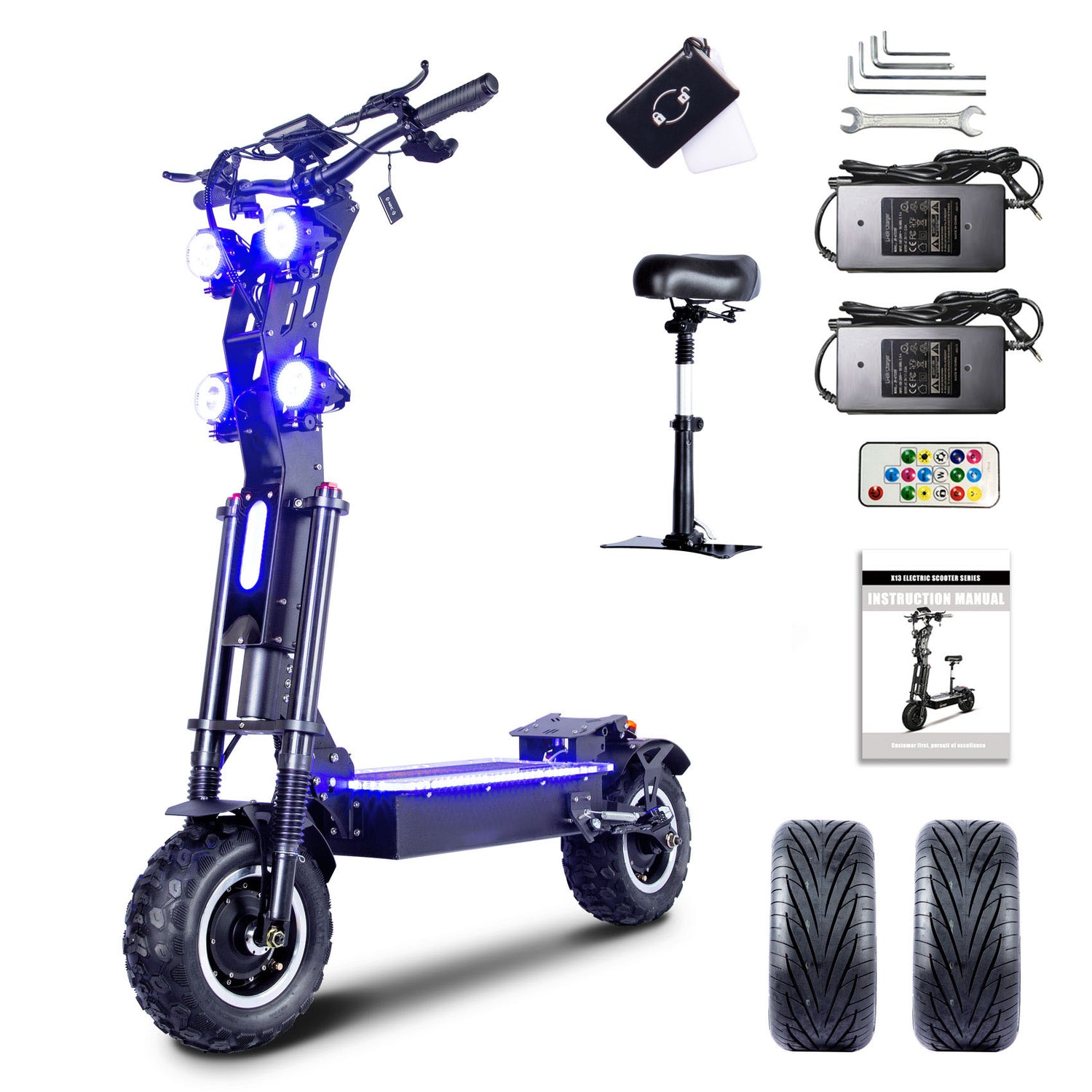
| Off-Road / All-Terrain | Trails, gravel, hills, private land | High-torque (often dual) motors, rugged tires, strong suspension |
The right type depends on how far you'll travel, the terrain, how much you value portability versus power, and your budget. A commuter who carries the scooter onto a train wants something light and foldable; a rider tackling gravel trails needs the rugged, high-torque end of the spectrum.
Who Are They For?
Two-wheeler electric scooters suit a wide range of riders and needs:
- Commuters: Covering the "last mile" between transit and home or work, or replacing short car trips.
- Students: Getting around large campuses quickly and affordably.
- City dwellers: Navigating congested areas without parking hassles, where local laws permit.
- Recreational riders: Enjoying rides around the neighborhood, parks (where allowed), or trails.
- Eco-conscious travelers: Choosing a zero-tailpipe-emission option for short trips.
They're best suited to short-distance travel rather than long journeys, and to riders comfortable with balance and standing while moving.
How to Ride One Safely
For most adults, a stand-up electric scooter is relatively easy to learn — often within a short practice session. Here's the basic approach for a first ride:
- Gear up first. Wear a helmet at minimum; gloves and pads add protection, especially for beginners.
- Start in a safe, open area. Practice away from traffic until you're confident.
- Find your stance. Stand on the deck with feet apart for stability, one foot ahead of the other often feels natural.
- Accelerate gently. Use a low-speed mode if available, and press the throttle smoothly rather than abruptly.
- Steer by leaning and turning. Lean slightly and turn the handlebars gently to steer.
- Brake smoothly. Practice gentle, progressive braking — avoid grabbing the brake hard, which can unsettle you.
- Build up gradually. Increase speed and tackle varied surfaces only as your confidence grows.
Safety first: Always wear a helmet, ride within your ability, stay alert to your surroundings, and be aware of your balance and fitness before riding. Don't ride faster than you can safely control, and follow local rules on where and how to ride.
Laws, Maintenance & Practical Notes
Know the Law
Electric scooter laws vary significantly by location and change over time. Some places allow them in bike lanes and on certain roads within speed and power limits; others restrict them to private property; and some require registration, insurance, helmets, or a minimum age. High-powered models may exceed legal limits for public roads. Always check the specific rules where you live before buying or riding.
Basic Maintenance
Electric scooters are low-maintenance, but a few habits keep them safe and long-lasting:
- Battery care: Charge per the manufacturer's guidance, use the approved charger, and avoid leaving it fully discharged for long periods.
- Tires: Check pressure (for pneumatic tires) and inspect for wear.
- Bolts & folding mechanism: Periodically confirm everything is tight and secure.
- Brakes: Test regularly; adjust or service as needed.
- Cleaning & storage: Keep it clean and dry, avoid submersion, and store in a cool, dry place.
Conclusion: A Simple, Versatile Way to Get Around
A 2-wheeler electric scooter is, at heart, a beautifully simple idea: a lightweight, two-wheeled, stand-up vehicle that uses an electric motor and battery to make short trips fast, easy, and emission-free at the point of use. You stand, you steer, you press the throttle — and the technology handles the rest, with far less maintenance than a fuel-powered vehicle.
From compact commuters to rugged off-road machines, there's a type to suit almost every short-distance need. If you're considering one, the key is to match the scooter to how and where you'll ride, learn to ride it safely, and understand the laws in your area. Do that, and a two-wheeler electric scooter can be one of the most convenient, enjoyable, and efficient ways to get around for the trips that matter most in everyday life.
Frequently Asked Questions
What is a 2-wheeler electric scooter?
A stand-up, two-wheeled personal vehicle powered by an electric motor and rechargeable battery, controlled by a rider standing on a central deck. It has front and rear wheels, a steering stem with handlebars, a throttle, and a brake. Unlike a seated moped, it's a lightweight, often foldable kick-style scooter for short-distance travel like commuting, campus trips, or recreation. The rider stands rather than sits, and the motor removes the need to push. They range from compact commuters to powerful off-road versions.
How does an electric scooter work?
A rechargeable battery powers an electric motor, usually built into one or both wheel hubs. Pressing the throttle makes the controller draw energy from the battery and send it to the motor, turning the wheel and propelling the scooter. You steer with the handlebars and slow with the brakes. Most use lithium-ion batteries recharged via a standard wall outlet, with a display for speed and battery. Some use regenerative braking. It's simpler and lower-maintenance than a combustion engine — no fuel, oil, or complex transmission.
Are they easy to ride?
For most adults, yes — often learnable within a short practice session in a safe, open area. The basics are intuitive: stand on the deck with feet apart, hold the handlebars, apply the throttle gently, lean slightly to steer, and brake smoothly. The main learning curve is balance at low speed and gentle braking. Beginners should start slowly, use a low-speed mode if available, wear a helmet and protective gear, and practice away from traffic until confident. Be aware of your balance and fitness before riding.
What's the difference between an electric scooter and a moped?
Design and how you ride. A 2-wheeler electric (kick-style) scooter is a stand-up vehicle with a deck, vertical stem and handlebars, typically lightweight and foldable for short trips. A moped or motor scooter is seated, larger and heavier, with a seat and step-through frame, built for higher speeds and longer road distances — usually requiring registration, insurance, and a licence. Kick-style electric scooters fall under different, varying local rules. The stand-up scooter is for short last-mile travel; a moped is closer to a small motorcycle.
Are electric scooters legal to ride?
It depends entirely on where you live — laws vary by country, state, and city and change over time. Some places allow them in bike lanes and certain roads within speed and power limits; others restrict them to private property; some require registration, insurance, a helmet, or a minimum age. High-powered models may exceed limits for legal road or sidewalk use and be intended for private land only. Check the specific regulations in your area, confirm where you can ride, and follow local rules on equipment. Riding legally and responsibly protects everyone.
How do I maintain one?
They're low-maintenance, but a few habits help. Charge the battery per the manufacturer's guidance, avoid long periods fully discharged, and use only the approved charger. Check tire pressure (pneumatic tires) and inspect for wear; keep it clean and dry, avoiding submersion; periodically confirm bolts, the folding mechanism, and stem are tight; and test the brakes regularly, adjusting or servicing as needed. Store in a cool, dry place. Following the owner's manual for charging, cleaning, and checks keeps a scooter reliable and safe.


