

Electric Scooter for Adults: Is It Worth It in 2026?
A no-fluff breakdown of the real ownership cost, who actually saves money, who shouldn't buy one, and how long it takes to break even versus a car, transit pass, or bike.
Search "best electric scooter for adults" and you'll drown in spec sheets — wattage, voltage, range. What almost no one publishes is the question that actually decides the purchase: does the math work for me?
This article skips the marketing claims and runs the real numbers. We'll calculate the true 5-year cost of owning an electric scooter for adults, compare it head-to-head with cars, public transit, and traditional bikes, identify exactly who saves money — and who doesn't — and finish with a recommendation tuned for riders who want their investment to actually last.
The Real 5-Year Cost of Owning an Electric Scooter
Most buyers focus on the sticker price and stop there. That's a mistake. To make a fair comparison with other transport options, you need to add insurance (where required), electricity, replacement parts, and resale value loss. Here's a realistic breakdown for a mid-to-high-tier adult electric scooter purchased in 2026:
| Cost Item | 5-Year Total |
|---|---|
| Purchase price (performance-class scooter) | €1,800 |
| Electricity to charge (~€0.15 per full charge × 250/yr) | €185 |
| Tire replacements (1 set every 18 months) | €180 |
| Brake pads + cables | €90 |
| Insurance / registration (varies by country) | €250 |
| Battery service or replacement (year 4–5) | €280 |
| Total 5-year cost of ownership | €2,785 |
That works out to roughly €46 per month, or €1.50 per day. Already, that's lower than most monthly transit passes in major European cities — and we haven't even calculated savings yet.
Electric Scooter vs. Car, Transit, and Bike: Who Wins?
Here's the same 5-year comparison across four common urban transport options for a typical European city dweller commuting around 10 km per day:
| Transport Mode | 5-Year Total |
|---|---|
| Owning a small car (fuel, insurance, tax, parking, depreciation) | €26,000+ |
| Monthly public transit pass (€80/mo average) | €4,800 |
| Electric scooter (mid-to-high tier) | €2,785 |
| Traditional bicycle | €800 |
The traditional bicycle wins on raw cost — but it loses on speed, weather protection, hill performance, and effort. The electric scooter is the cheapest motorized option, beating a car by roughly €23,000 over 5 years and a transit pass by around €2,000. For longer commutes (15+ km), the gap widens further.
How Long Until Your Electric Scooter Pays for Itself?
The break-even point depends entirely on what you're replacing. The shorter the payback period, the better the investment:
- Replacing a car: Most adult riders break even in 3–5 months. Fuel and parking alone typically exceed €400 per month in major cities.
- Replacing a transit pass: Break-even falls between 15–22 months, depending on monthly pass cost and how much you ride.
- Replacing rideshare or taxis: If you currently spend €100+ monthly on Uber, Bolt, or similar, payback drops to 12–18 months.
- Adding a second mode of transport (you still own a car): Payback stretches to 2–3 years, since you're saving on incremental fuel and parking, not the full ownership cost.
In every realistic scenario, a quality adult electric scooter pays for itself well within its expected service life. The only buyers who lose money are the ones who rarely ride it — which brings us to the most useful part of this analysis.
Who Should (and Shouldn't) Buy an Adult Electric Scooter
The math above assumes you actually use the scooter. To save you a regret-purchase, here's the honest split based on real-world rider data:
You'll likely save money
- Daily commuters traveling 5–25 km each way
- Urban dwellers paying for parking or congestion zones
- Riders replacing rideshare or taxis
- Adults whose transit options are slow or unreliable
- Weekend off-roaders adding a recreational vehicle
Reconsider before buying
- Routes longer than 30 km each way (battery strain)
- Climates with 6+ months of heavy rain or snow
- No secure indoor storage at home or work
- Riders who only ride a few times a year
- Hilly routes paired with budget single-motor models
If you fall in the "Worth It For" column, the scooter category to look at is dual-motor performance models. They handle hills, heavier loads, and longer distances without the battery and motor stress that kills cheaper single-motor scooters within 18 months. You can browse the relevant range in the dual-motor electric scooter collection — these are the models built for adults who'll actually rack up the kilometers.
The Hidden Costs Most Buyers Forget
Three frequently-overlooked expenses can quietly eat into your projected savings if you're not aware of them upfront:
1. Battery degradation and replacement
Lithium-ion batteries lose roughly 20% of their capacity after 500 charge cycles — typically year 3 to 4 of regular use. A quality replacement battery pack costs €250–€450, depending on voltage and capacity. Premium models with larger 72V/50Ah batteries degrade more slowly, since you cycle them less frequently for the same distance.
2. Theft and insurance
An adult electric scooter is a theft target in many cities. Comprehensive insurance runs €40–€80 per year, plus a quality lock adds another €60–€100 to the upfront cost. In countries like Germany, registration and insurance markings are legally required for road-legal use.
3. Resale value collapse on cheap models
Budget scooters under €600 lose 70%+ of their value within two years and have weak parts availability. Mid-to-high-tier scooters from established brands hold value far better — typically 50–60% retained after 2 years — and are easier to repair, which extends their useful life and lowers your true cost per kilometer.
Premium vs. Budget: Why Cheaper Often Costs More
This is the counterintuitive part. A €500 budget scooter looks like the obvious value play — until you run it for 18 months. By that point, most riders have replaced the controller, the battery is at 60% capacity, and parts are out of stock because the importer pivoted to a new model. Total cost so far: roughly €900, and the scooter is on its way to landfill.
By contrast, a €1,800 performance scooter with proper after-sales support typically delivers 4–5 years of reliable service, holds resale value, and rarely needs major component replacements. Cost per year drops below the budget option within 24 months. That's why riders who plan to actually use their scooter daily should look at performance-tier electric scooters rather than entry-level commuter models — the durability gap is significant, and it shows up directly in your wallet.
Our Recommendation: Built to Last, Built for Adults
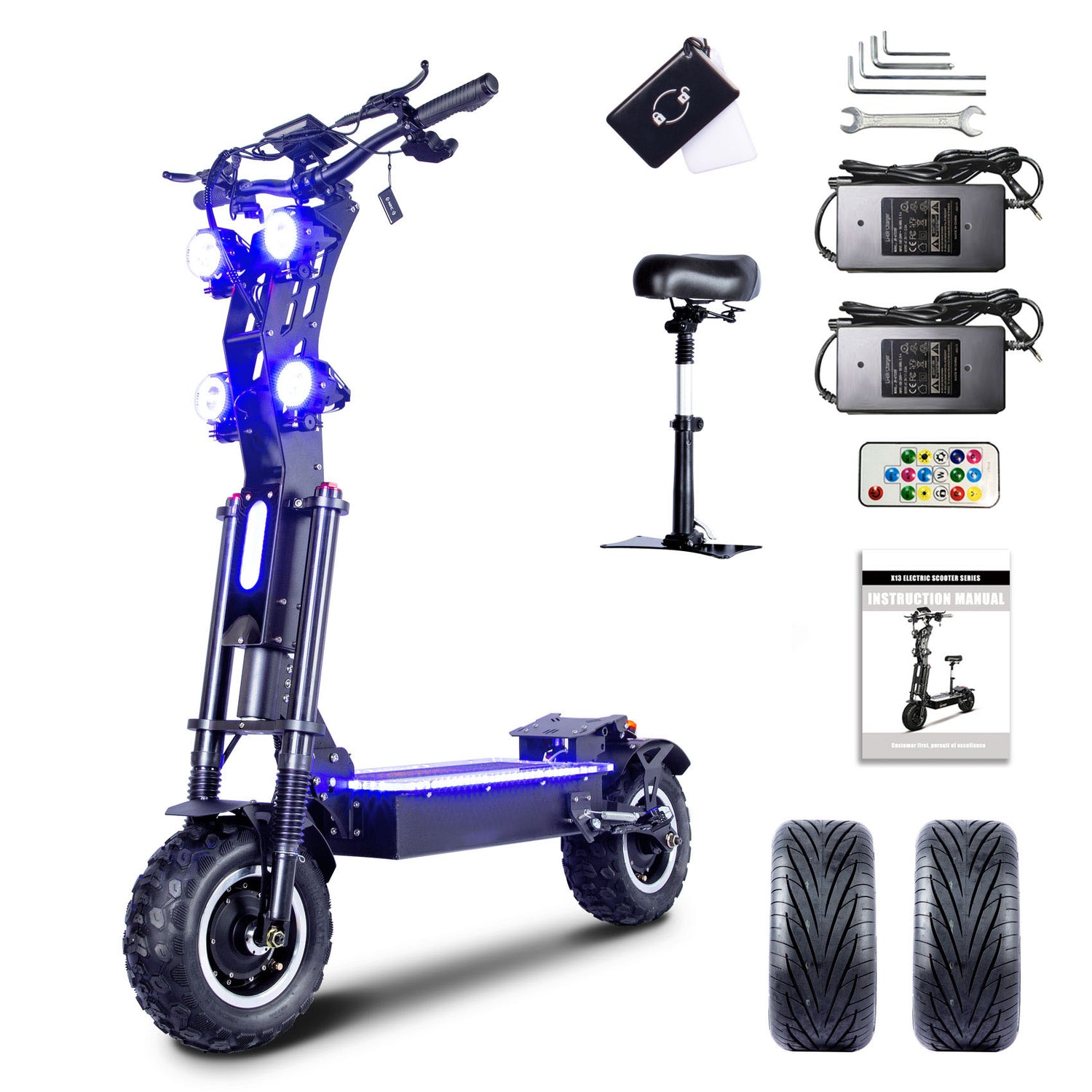
For adult riders who want the math to keep working in their favor for years rather than months, the HWWH P3 is engineered specifically with heavier and longer-distance riders in mind. The 200 kg load capacity is the spec that quietly matters most for ownership cost — every component, from the frame to the suspension to the motors, is rated to handle real adult weight without accelerating wear. That's how you protect a four-figure investment over five years.
The HWWH P3
Built for serious adult riders who want a scooter that earns its keep. Ten thousand watts of dual-motor power, 130 km of range, and a 200 kg load rating mean you're not paying for hardware that'll degrade under your actual use. Engineered for both daily commuting and weekend touring without becoming a maintenance project in year two.
Frequently Asked Questions
How much does it cost to charge an electric scooter?
For a typical 72V/50Ah battery at €0.30 per kWh (the European average in 2026), a full charge costs roughly €1.05. If you charge twice per week, that's about €110 per year — significantly less than a single tank of fuel.
How long do electric scooters actually last?
Quality adult electric scooters in the €1,500–€2,500 range typically last 4–6 years with regular use, assuming proper storage and routine maintenance. The frame and motors usually outlast the battery, which can be replaced rather than scrapping the whole scooter.
Will an electric scooter actually replace my car?
For commutes under 25 km in a city, yes — for many riders. For families with children, frequent grocery runs, or routes with heavy winter weather, an electric scooter usually works best as a complement rather than a full replacement. The economics still favor it heavily either way.
Are electric scooter insurance costs significant?
In countries that require it (Germany, Belgium, France, and others), basic e-scooter insurance typically runs €40–€80 per year. That's well below the €600+ annual cost of car insurance and is already factored into the cost analysis above.
What's the cheapest way to start with an adult electric scooter?
Counterintuitively, "cheapest upfront" rarely means "cheapest overall." A €500 scooter often costs €900+ within two years due to early failures and parts availability. A mid-tier model from an established brand with proper warranty and replacement parts is almost always cheaper per kilometer over the full ownership period.
The Bottom Line
For most urban adults in Europe replacing a car or relying on slow transit, an electric scooter for adults is one of the highest-ROI transport investments available in 2026 — typically paying for itself within 3 to 22 months depending on what you're replacing, then continuing to save money for years afterward.
The buyers who regret the purchase aren't the ones who calculated the math wrong. They're the ones who picked a budget scooter that didn't survive their actual use, or who bought without honestly assessing how often they'd ride. Match a quality scooter to a real, recurring transport need, and the economics take care of themselves.


