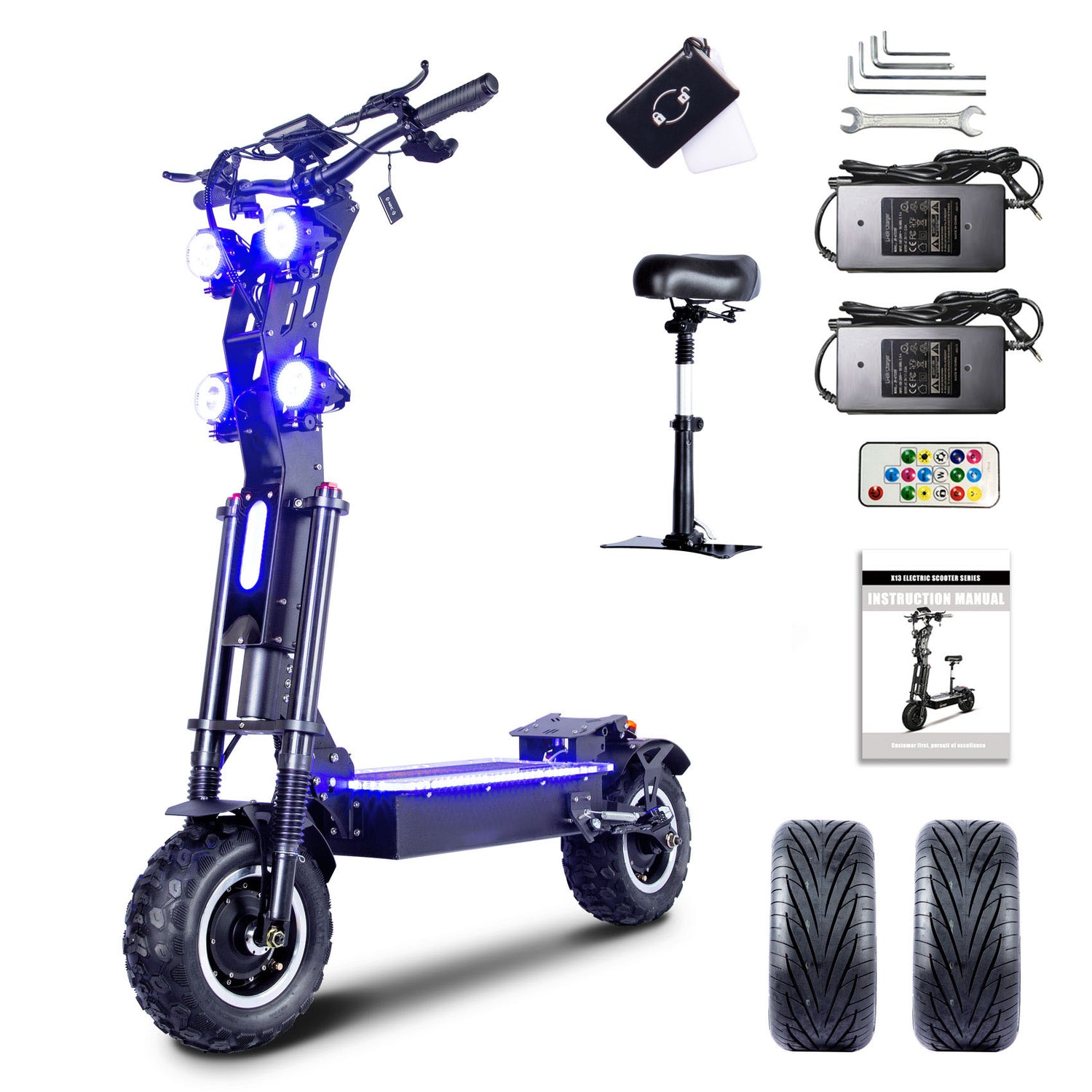


The Best Electric Scooter for Adults:High-Performance Buying Guide (2026)
The electric scooter has come a long way from the lightweight toys of a decade ago. Today's electric scooters for adults are serious machines — capable of real commuting distances, genuine off-road capability, and performance that rivals small motorcycles. But that range of capability also makes choosing the right one more complicated. A scooter built for a flat city commute is a completely different machine from one built to climb steep trails or cover long distances at speed.

So how do you choose the best electric scooter for your needs as an adult rider? The answer lies in understanding the specifications — what they mean, how they affect your ride, and how to match them to the way you'll actually use the scooter. The most powerful scooter isn't automatically the best one for you, and neither is the cheapest.
This guide breaks down everything you need to know: the key specifications that determine performance, how to match a scooter to your riding style, what build-quality and safety features to look for, and important notes on riding responsibly. By the end, you'll be able to confidently choose an adult electric scooter that fits your real needs.
Who Are High-Performance Adult Scooters For?
Before diving into specifications, it helps to identify which type of rider you are. Adult electric scooters span an enormous range of capability, and the right machine depends heavily on your priorities.
- The performance commuter: You want to get to work quickly, climb the hills on your route without slowing to a crawl, and not worry about running out of battery. You value strong acceleration and reliable range over maximum top speed.
- The off-road adventurer: You ride trails, gravel, dirt, and rough terrain. You need big tires, real suspension, high ground clearance, and the torque to climb steep, loose surfaces.
- The long-range tourer: You cover serious distances and want a large battery, comfortable ride, and the stamina to go 100 km or more on a charge.
- The performance enthusiast: You want maximum power, speed, and capability — a machine that delivers a genuine thrill and the engineering to back it up.
Most riders are a blend of these, but one usually dominates. Identifying your primary type is the foundation of choosing well, because it tells you which specifications to prioritize. A brand like HWWH builds across this whole spectrum — from city-focused single-motor models to extreme dual-motor performance machines — so you can explore the full HWWH electric scooter range and match a model to your rider type.
The Key Specifications, Decoded
Scooter spec sheets are full of numbers, but a handful matter most. Here's what each one means and how it affects your ride.
1. Motor Power (Wattage)
What it tells you: Power output, measured in watts (W), is the single biggest driver of acceleration, top speed, and hill-climbing ability. Single-motor scooters drive one wheel; dual-motor scooters drive both for far more torque and traction.
Rough guide: 350-1,200W suits flat city commuting; 1,200-5,000W handles hills, heavier riders, and faster commuting; 6,000W and above (usually dual-motor) is built for serious off-road and performance riding.
2. Top Speed
What it tells you: How fast the scooter can physically go. This is tied closely to motor power and battery voltage. Commuter models often top out around 25-45 km/h (15-28 mph), performance models reach 60-85 km/h (37-53 mph), and extreme dual-motor machines can exceed 100 km/h (62 mph).
Important: A scooter's maximum capability and the speed you're legally allowed to ride on public roads are different things — more on that below. To understand the relationship between power and speed in more depth, see HWWH's explainer on how fast an electric scooter can go.
3. Battery: Voltage, Capacity & Range
What it tells you: Voltage (e.g. 48V, 72V) relates to power delivery and top speed — higher voltage supports more powerful performance. Capacity in amp-hours (Ah) relates to stored energy and therefore range. Together they determine how far you can go.
Reality check: Advertised range is a best-case figure. Real-world range is usually lower, depending on rider weight, terrain, speed, and temperature. For long rides, prioritize higher capacity and plan for somewhat less than the headline number.
4. Tires & Suspension
What it tells you: Tire size and type, plus the suspension system, define ride comfort and terrain capability. Larger pneumatic or tubeless tires (11-14 inches) absorb bumps and grip loose surfaces; off-road tires add tread for dirt and gravel. Suspension — hydraulic, spring, or a combination — smooths out rough ground.
Match to terrain: Smooth city streets need less; trails and rough roads demand bigger tires and full suspension.
5. Braking System
What it tells you: Brakes are a safety-critical spec, especially as power and speed climb. Hydraulic oil brakes (such as the XOD oil brakes on many performance models) offer strong, consistent stopping power. The faster your scooter, the more your brakes matter.
Look for: Dual braking systems and quality hydraulic brakes on any high-speed model.
6. Climbing Ability & Max Load
What it tells you: Climbing ability (stated as a maximum incline angle, e.g. 30-45°) tells you how well the scooter handles hills. Maximum load capacity tells you the heaviest rider (plus cargo) the scooter is built for — important for both performance and safety.
Don't overlook: A heavier rider or hilly area needs more power and a higher climb rating to perform well.
Matching the Scooter to Your Riding Needs
With the specifications understood, here's how to translate your rider type into the right machine. HWWH's lineup illustrates how different specs come together for different needs.
For City Commuting
Prioritize a manageable weight, comfortable range, and enough power for your route's hills — without the bulk of an extreme machine. A single-motor city model like the HWWH X5C (1,200W, around 45 km/h, ~70 km range, 11-inch road tires) is the kind of balanced commuter setup that handles daily urban riding while staying relatively light and easy to fold.
For Off-Road & Trails
Prioritize dual motors, high wattage, large off-road tires, full suspension, and a high climb angle. A model like the HWWH P8 (8,000W dual motor, 14-inch off-road tires, hydraulic plus spring suspension, ~40° climbing ability, 200 kg max load) is built for exactly this kind of rough-terrain capability and stability.
For Long-Range & Maximum Performance
Prioritize high battery voltage and capacity (72V systems), dual high-power motors, and a frame built for stability at speed. HWWH's flagship machines pair 10,000W dual-drive power with 72V high-capacity batteries for triple-digit speed capability and 120+ km of range — supercar-style performance for riders who want the absolute top of the range.
The lesson is consistent: identify your dominant need, then choose the model whose specifications serve it. A commuter doesn't need 10,000W, and an off-road enthusiast won't be happy with small road tires. The best scooter is the one matched to how you actually ride.
Build Quality, Safety & Smart Features
Beyond the headline performance numbers, the quality of construction and the convenience features make a real difference to ownership. These are what separate a machine you'll enjoy for years from one that disappoints.
Frame & Construction
Look for a reinforced aluminum alloy frame, which balances strength and weight. On performance scooters, frame rigidity directly affects stability at speed, so robust construction isn't just about durability — it's about safe, confident handling.
Suspension & Ride Comfort
Quality suspension (hydraulic, spring, or both) transforms the ride, especially over rough surfaces. For any scooter you'll ride off-road or for long distances, dual suspension is well worth prioritizing.
Smart & Convenience Features
Modern adult scooters increasingly include genuinely useful tech: NFC keyless start for security and convenience, smart LCD or LED displays showing speed and battery status, cruise control for steady riding, quality lighting systems for visibility, and foldable designs for storage and transport. These features don't change raw performance but greatly improve everyday usability.
Buying tip: When comparing two scooters with similar power and range, the build quality, suspension, brakes, and smart features often decide which is genuinely better to live with. Don't judge on wattage alone.
Riding Responsibly: Safety & Local Rules
High-performance capability comes with responsibility. Before you buy and ride, it's important to understand how and where you can legally and safely use your scooter.
Know your local laws. In the United States, electric scooter rules vary by state and even by city. Many areas set speed limits for e-scooters on public roads and bike lanes — commonly around 15-20 mph (24-32 km/h) — and some restrict motor power or where scooters can be ridden. High-performance scooters that exceed these limits are often best enjoyed on private property or in locations where higher speeds and higher-powered vehicles are permitted. Always check your state and local regulations before riding on public roads.
Regardless of where you ride, safety gear matters — especially as speed increases. A properly fitted helmet is essential, and protective gear like gloves, knee and elbow protection, and high-visibility clothing significantly reduce injury risk. Ride defensively, maintain your brakes and tires, and build up to higher speeds gradually as you learn the machine's handling.
The key principle is simple: a scooter's capability and where you're permitted to use that capability are separate things. Buying a powerful machine is exciting, but riding it responsibly — within the law and with proper gear — is what keeps the experience enjoyable and safe for you and everyone around you.
HWWH Model Comparison at a Glance
To see how specifications scale across rider needs, here's how several HWWH models compare. Use it as a reference for how the specs translate into real machines.
| Model | Motor Power | Top Speed | Range | Best For |
|---|---|---|---|---|
| X5C | 1,200W single | ~45 km/h | ~70 km | City commuting |
| X5A | 5,000W dual | ~60 km/h | ~80 km | City + light off-road |
| S3ZB-2 | 6,000W dual | ~85 km/h | ~100 km | Off-road performance |
| P8 | 8,000W dual | ~85 km/h | ~100 km | Serious off-road |
| P4 / S10 | 10,000W dual | ~100 km/h | 120-130 km | Maximum performance |
Specifications as listed by HWWH; actual range varies with rider weight, terrain, speed, and conditions.
Final Buying Considerations
Once you've narrowed down the right model, a few practical factors round out a smart purchase decision.
- Warranty: Look for a manufacturer warranty (HWWH provides a one-year manufacturer's warranty). Note that damage from improper use or modification, and consumable parts like tires and brakes, are typically not covered.
- Returns: A return window lets you confirm the scooter suits you. HWWH offers free returns within 30 days of delivery on unused items.
- Shipping & availability: Check shipping origin and times. HWWH ships US orders from California and EU orders from Poland, typically within a few days.
- Financing: Flexible payment options (such as Klarna) can make a high-performance machine more accessible.
- After-sales support: Responsive support and parts availability matter for a machine you'll rely on. Buy from a brand that stands behind its products.
Quick Buyer's Checklist
- Identified your rider type — commuter, off-road, long-range, or performance
- Motor power matched to your terrain and goals
- Top speed and range suited to your needs (range planned conservatively)
- Tires and suspension appropriate for your surfaces
- Quality braking system — hydraulic and dual brakes for high speed
- Climb rating and max load sufficient for you and your routes
- Build quality and smart features evaluated, not just wattage
- Local laws checked and safety gear ready
- Warranty, returns, and support confirmed
Conclusion: Choosing Your Ideal Adult Electric Scooter
The best electric scooter for adults isn't the one with the biggest numbers on the spec sheet — it's the one whose specifications match how you actually ride. Start by identifying your rider type, then prioritize the specifications that matter most for that use: power and climbing for hills and off-road, battery capacity for long range, tires and suspension for rough terrain, and quality brakes for any high-speed machine.
Don't judge on wattage alone — build quality, suspension, braking, and smart features all shape how good a scooter is to own and ride. And whatever you choose, ride responsibly: know your local laws, use high-speed capability where it's permitted, and always wear proper safety gear.
From balanced city commuters to extreme dual-motor performance machines, HWWH builds across the full spectrum of adult riding needs. Browse the full lineup to find the machine matched to your riding — and get the power, range, and capability that fit the way you ride.
Frequently Asked Questions
What is the best electric scooter for adults in 2026?
There's no single best scooter for every adult — the best choice depends on how you ride. Balance motor power, top speed, battery range, ride quality, and build against your primary use: city commuting, off-road, long-range touring, or carrying a heavier rider. Commuters often do well with a capable single-motor model, while off-road and performance riders benefit from dual motors, higher wattage, larger tires, and full suspension. Identify your main use case first, then match the specifications to it.
How much motor power does an adult electric scooter need?
It depends on your riding. Flat city commuting works with roughly 350-1,200W; hills, heavier riders, or faster commuting benefit from 1,200-5,000W; serious off-road and maximum performance call for dual-motor systems of 6,000W and above. Higher wattage means more speed, acceleration, and climbing ability, but also more weight and cost. Match power to your terrain and goals — though for demanding off-road and performance use, ample power genuinely matters.
How fast do adult electric scooters go?
It varies widely. Entry and commuter models reach 25-45 km/h (15-28 mph), mid-range performance models 60-85 km/h (37-53 mph), and high-performance dual-motor machines can exceed 100 km/h (62 mph). Top speed ties closely to motor power and battery voltage. Remember that what a scooter can reach and what you're legally allowed to ride on public roads differ — high-speed models are often best enjoyed on private property or where higher speeds are permitted.
What should I look for in an electric scooter battery?
Look at voltage, capacity, and resulting range. Voltage (such as 48V or 72V) relates to power and top speed; higher voltage supports more powerful performance. Capacity in amp-hours (Ah) relates to stored energy and range. Real-world range is usually lower than advertised because it depends on rider weight, terrain, speed, and temperature. For longer rides, choose higher capacity and treat the advertised range as a best-case figure.
Are high-performance electric scooters legal to ride?
It depends on where you ride. In the US, e-scooter rules vary by state and city, and many areas set speed limits on public roads and bike lanes (often around 15-20 mph). High-performance scooters that exceed these limits are often best used on private property or where higher speeds and higher-powered vehicles are permitted. Always check local and state regulations before riding on public roads, wear a helmet and safety gear, and ride responsibly.


